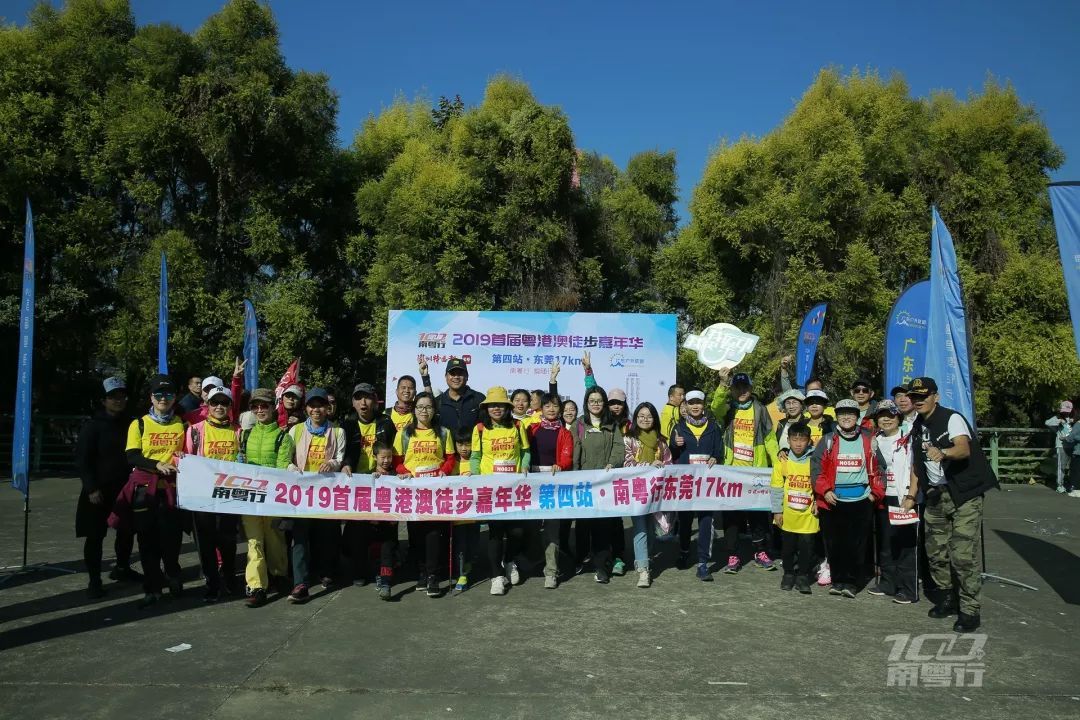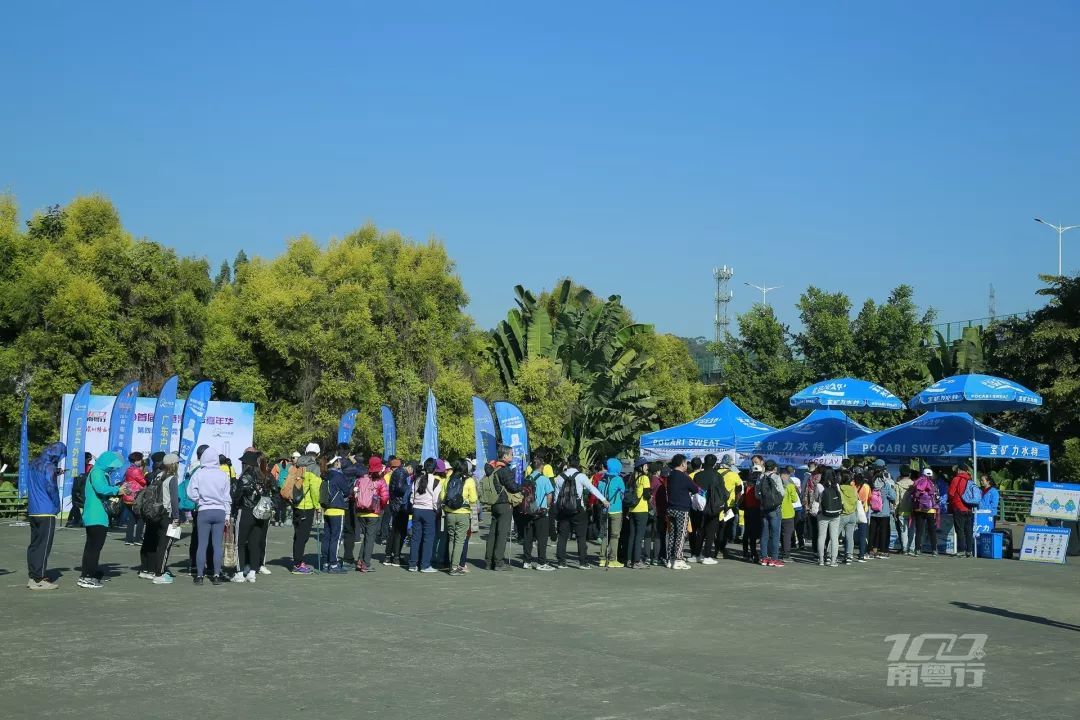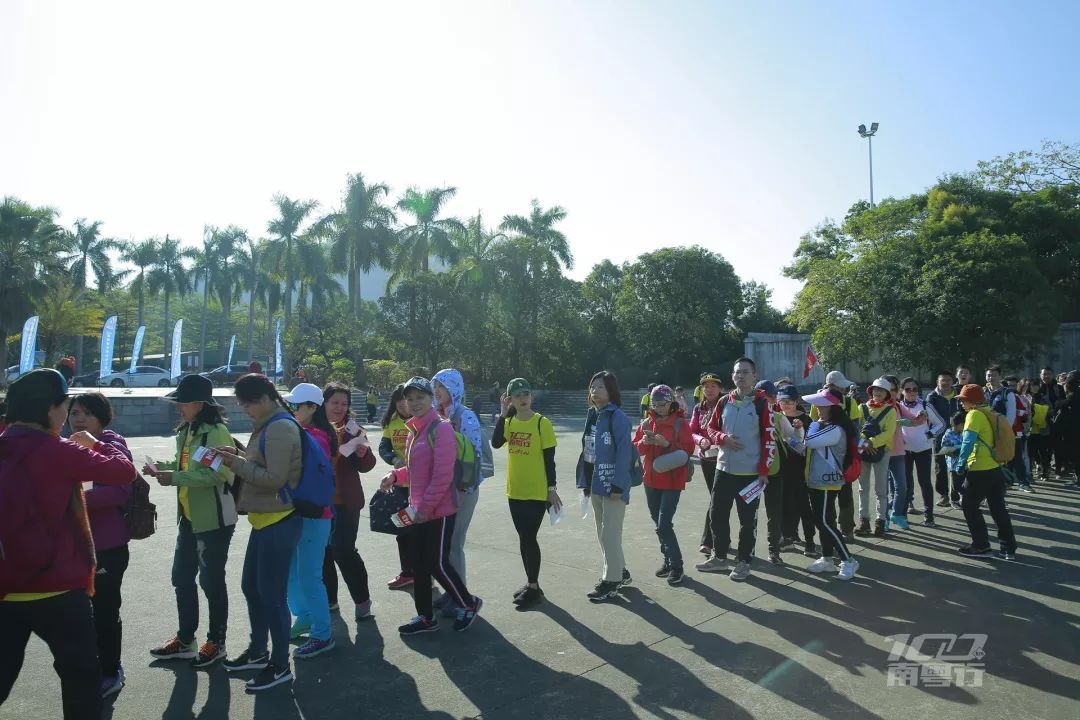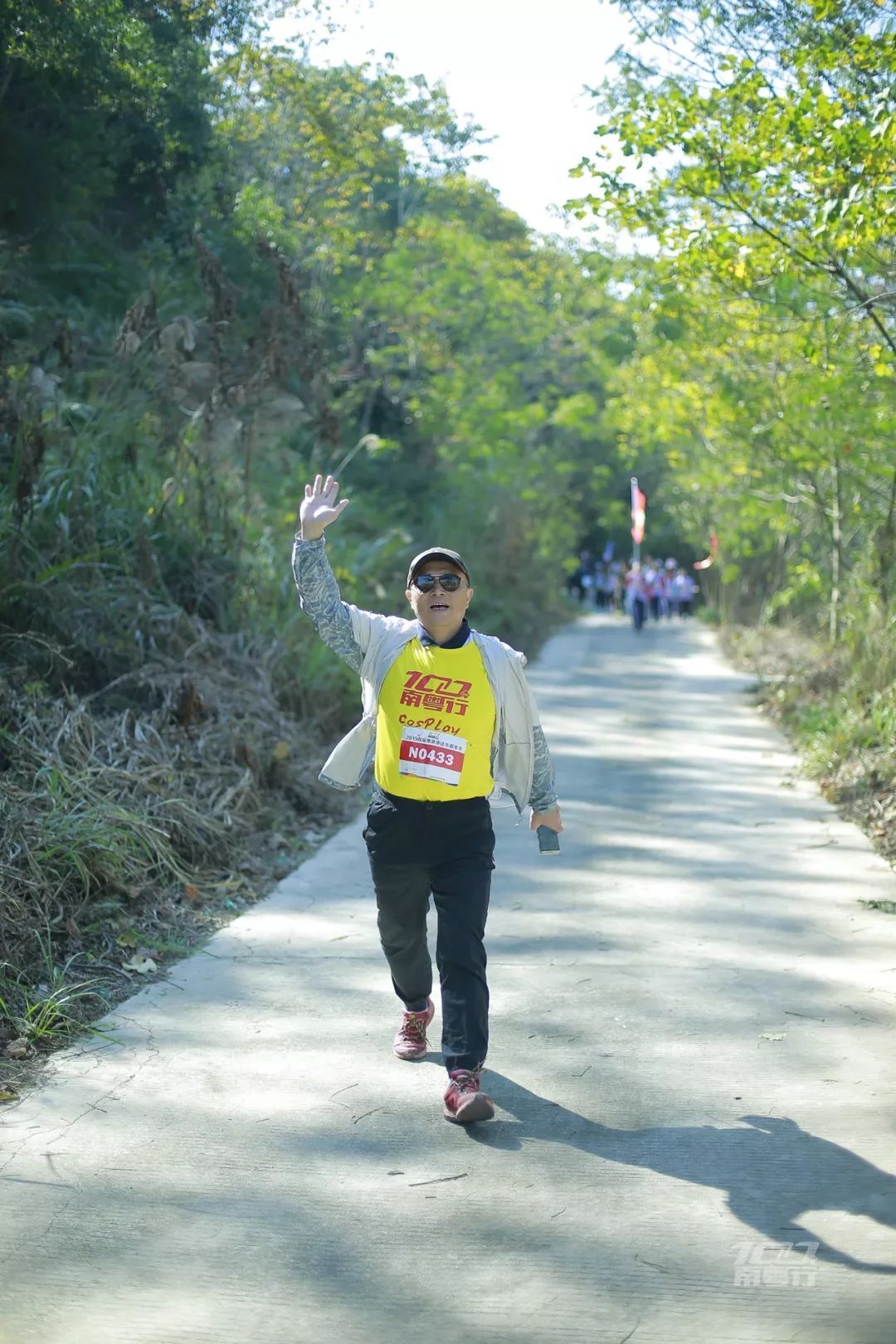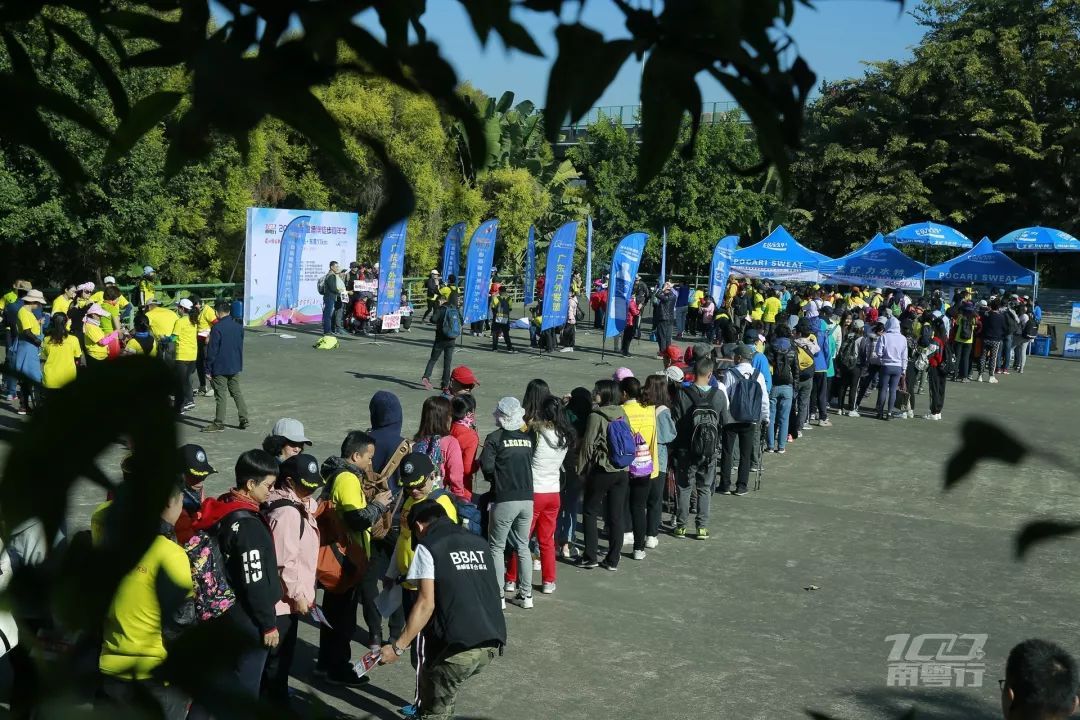
On a crisp December morning in 2019, more than a thousand people gathered at Huangniupu Forest Park in Dongguan for the fourth stop of the Nanyue Hiking Festival — a 17-kilometre loop around the lake, through forest, wetland and greenway.
Events at this scale live or die on logistics. Check-in and kit distribution before the start. Supply stations spaced along the route, stocked with water and fruit, staffed by volunteers in red vests. Signage at every junction. Medical support on standby. A finish-line ceremony where every walker — from racing grandparents to six-year-olds in oversized race bibs — got their moment.
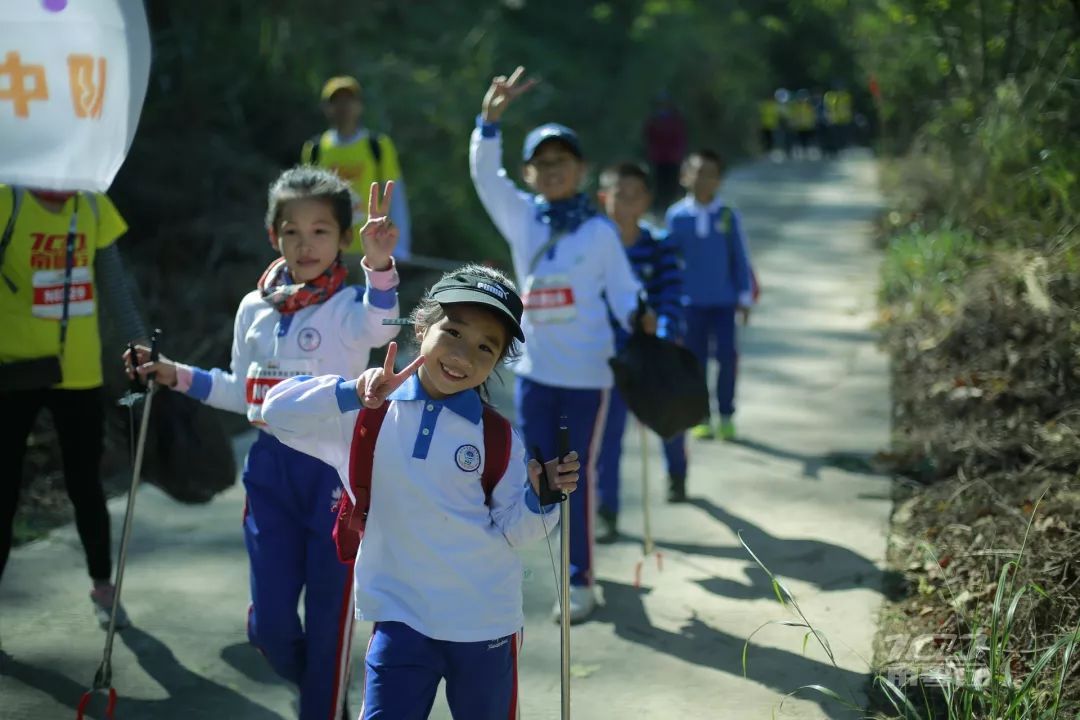
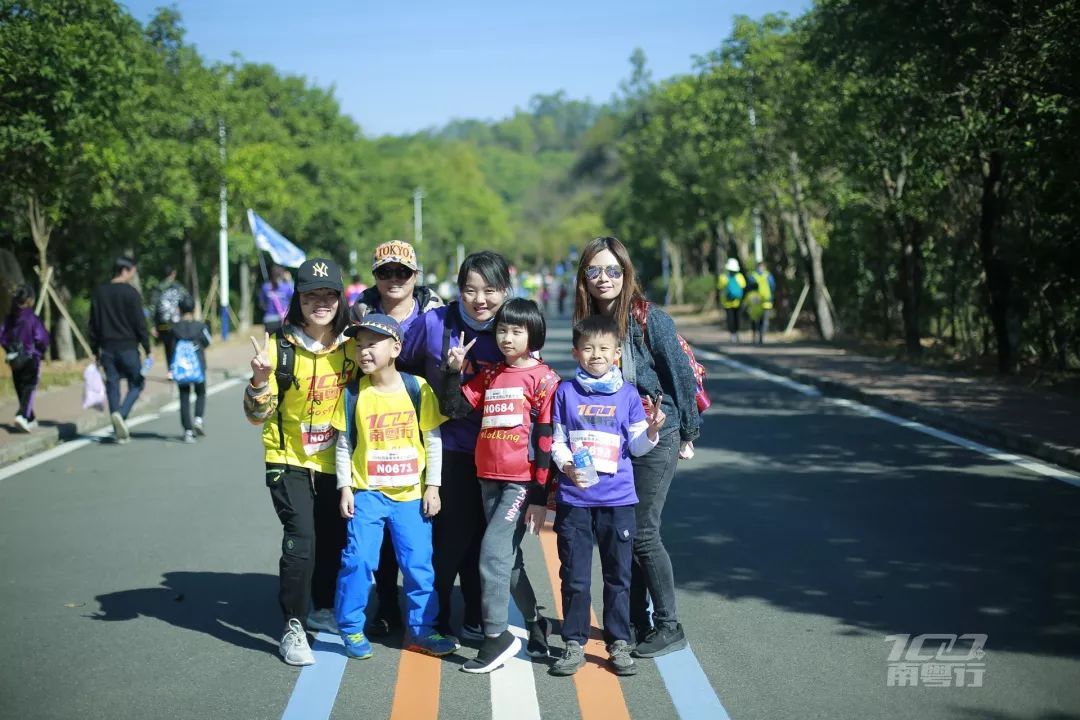
Our favourite photos from that day aren't the stage or the banners. They're the kids: walking the full loop with their parents, collecting stamps at checkpoints, and collapsing grinning onto the grass at the finish. Hiking is a family sport here — and festivals like this are where many Chinese families catch the bug.
We helped run this event series across multiple cities, year after year. When we say "group logistics," this is what we mean.
What it takes to move a thousand people
The unglamorous answer is queues and water. Check-in opened at seven in staggered waves rather than all at once, because a thousand walkers arriving in one line at one table is a two-hour wait and a great deal of bad temper. Race kits — bib, timing chip, route card, festival buff — were packed the night before into bags sorted by team and by city, so distribution on the morning was a lookup rather than a search.
Along the 17 kilometres we ran more than ten supply stations, spaced roughly every 1.5 to 2 kilometres. Each had water and cut fruit, a first-aid kit, and at least two volunteers in red vests whose real job was not handing out cups but reading faces. A walker sitting down at a supply station is usually fine. A walker sitting down and not reaching for water is not, and that is the sort of thing a volunteer notices and a signpost never will.
Every junction had a sign and a human standing next to it. This matters more than it sounds: on a loop around a lake there are three or four points where a tired walker can convince themselves that the shorter path is the right one, and one redirect at the right moment saves a search party two hours later. Medical cover sat on standby at the start-finish area and moved along the route. We used radios rather than phones, because a forest park on a busy festival morning is exactly the place where mobile data decides not to work.
The route, and why it suits kids
Huangniupu's lakeside loop is close to ideal for a family event. Seventeen kilometres of mostly flat and gently rolling ground, on a mix of forest trail, wetland boardwalk and tree-lined greenway. The boardwalk gives you shade and a view at the same time, which is rare. The surface is firm and drains well, so a wet December does not turn the greenway into the mud bath that a mountain trail would become. And it is a loop rather than an out-and-back: you never re-walk ground you have already covered, which is the single biggest difference between a child finishing and a child being carried.
The checkpoints did the rest of the work. Every stamp on the route card was a small, achievable target about twenty minutes ahead, and the final two kilometres — usually the hardest — had the densest stamps and the loudest volunteers. Distraction is legitimate sports science when you are eight years old.
Where family hiking here comes from
Hiking is a family sport in Guangdong in a way that surprises first-time visitors. Weekend trails around Shenzhen and Dongguan fill up with three-generation groups, grandparents setting the pace and children setting the noise level. Festivals like this one did not create that culture, but they gave it a calendar and a finish line.
Qumogu's own programme grew out of the same observation. Founded in 2009, the company spent its first two years running outdoor family days and kept meeting the same gap: children who were perfectly at ease in a shopping mall and genuinely unsure in a forest — unable to judge a slope, read a trail sign, or pace themselves across three hours. From 2011 we built a 3–14 outdoor curriculum modelled on Scouting, the Duke of Edinburgh's Award and international nature-education practice, adapted to what actually works in southern China's climate and school calendar. Compass work, contour reading, route planning, carrying your own water. Small skills, but they are what turn a walk into a walk a child can do without an adult holding their hand.
If you are planning a family hike in Guangdong
Choose the season before you choose the route. December to February gives you the crisp, dry, clear days that make a long loop genuinely pleasant. May to September gives you heat, humidity and afternoon thunderstorms, which means shorter distances and early starts. Plan on roughly one kilometre per year of age for a comfortable day out, and halve it if there is real climbing involved. Carry more water than feels necessary — 500 ml per child per hour is a fair starting point in cool weather, and considerably more in summer. Feed them before they ask. And put the slowest walker second in line, not last: nobody enjoys being the person the group is waiting for, and a child left at the back of the queue will simply stop walking.